Showing posts with label American. Show all posts

Wednesday, November 23, 2011

French Native Americans

This is my English translation of this French article.


Those American Indians who speak French
by Jean-Michel Selva

Father Roch Naquin, Houma Catholic priest

The Houma tribe of Louisiana speak French the way it was used in the 18th century. But the destruction of their environment by oil companies threatens the harmony of this ethnolinguistic community.

They are the cousins of the Apaches and the Sioux. Their skin is red and they speak our language, or rather, that of Montesquieu. Houma Indians are the forgotten ones in the history of Louisiana, where they had to seek refuge from advancing white settlers from England in 1765, following the Expulsion of the Acadians. Already 30 km (18.6 mi) out from Houma, a little town south of New Orleans, and still nothing in sight except a narrow strip of land jutting out into the water. The huge 4x4 Chevrolet Silverado of Thomas Dardar Jr (below), community leader of the Houma Indians, speeds ahead of us and guides us across Isle de Jean Charles. Destroyed by Hurricane Katrina in 2005, the road, which sinks into the bayous towards the Gulf of Mexico, has just been rebuilt.

Finally, rising in the distance are Pointe-aux-Chenes and breathtaking houses on pilotis, a sort of mobile homes erected on wooden stilts, overlooking the lagoon. "Watch Pipeline", warn signs stuck in the middle of the waters, extending out from either side of the road. A few dead trees, eaten away by salt, are the only ones accompanying us on this road. In this abandoned setting live the majority of the French-speaking Houma Indians.

Black pants, turquoise shirt, and a vest with Indian designs on which his braid sways back and forth, stretching down his back, the leader Dardar stops between the pilotis under a huge yellow dwelling. Father Roch Naquin comes to welcome him, they greet each other with open arms, very French indeed.

Allies of the French

"At the end of the 17th century, before the strained relations between French and English settlers, our community naturally formed an alliance with the former, because the explorers Cavelier de La Salle and Pierre Le Moyne d’Iberville had always been supportive of it," explains Thomas Dardar. "As a result, our ancestors learned the French language, and passed it down to us orally. The vast majority of the Houma can neither read it nor write it, but they always speak it."

Banned from schools for being Indians, the Houma were eventually allowed to enroll in public education starting in 1964. But until 1975, they were punished whenever they dared to say a sentence in French. For this tribe of American Indians, a three-century-old form of French was able to endure, because of the cultural importance of oral tradition and their practice of it without contact with the outside world.


The Houma thus saved from oblivion expressions like: catin (harlot/whore/prostitute) for poupée (doll); char (chariot/tank/ wagon) for automobile (car); espérer (hoping) for attendre (waiting); s'épailler (removing dirt from badly forged gold) for s'étendre (stretching/spreading/expanding); and even "icitte" for "ici" (here), "au boutte" for "au bout" (at the end)...They mix as many words with Choctaw, their ancestors' language.

"The State of Louisiana granted us Indian nation status only in 1979," notes Thomas Dardar, "but we're still waiting for federal recognition, already rejected in 1994." "We here are the roughly 17,000 Houma Indians, divided into three clans, united by the use of the French tongue." Father Roch Naquin like to say he considers himself French and Indian. "My ancestor Charles came from the Bordeaux region and married an Indian. Here on Isle de Jean Charles, my father and those of his age spoke and wrote French. He then learned English, unlike my mother who never wanted to. Today only the eldest of my neighbors refuse to. The youngest became English speakers. It will be hard to preserve our language." At 55 years old, even the chief Thomas Dardar who's mastered French perfectly uses the American language more often. This generation of Houmas in their fifties may be the last to express themselves in the language of Molière. The last surviving link to a way of life that's already no more.

A Difficult Life

"Forests with tall trees used to grow here," recalls Chief Dardar. "Over there, my grandfather raised cattle in the meadows where muskrats would run," points Roch. "We had horses to plow the land, which produced enough to feed us. With the intensive oil drilling, salt water has leaked everywhere, it continues to eat our land and destroy all the vegetation."

To survive, the Houma community, scorned by everyone for centuries, turned to fishing. Some of them have managed to become lawyers and doctors, others have left to work in the shipyards. But for one year now, because of the oil spill in the Gulf of Mexico, the Houma can no longer fish like before. Skin diseases and respiratory problems have emerged. "They seem to be linked to BP spreading solvents to get rid of the oil slick floating in the gulf."

This fragile community is plagued and weakened even more: "very few among us have access to adequate social welfare," laments chief Dardar. "We've also suffered from the last four hurricanes. My house has been raised higher above ground on three occasions in twenty years, the roofing replaced a number of times. Leave and go elsewhere? No, no, this here is my house, this is the land of our ancestors," protests Father Roch Naquin.


Tuesday, September 11, 2007

The world was America

Today is the 6th anniversary of the September 11, 2001 attacks. Most people consider it to be an American tragedy just because it happened in the US. But the fact is, dozens of nations lost citizens in the attacks. It happened in America, but not everyone who died was an American citizen.

According to this page from the United Arab Emirates' American embassy, the victims of 9/11 came from 82 countries; including 25 people from Canada, 67 from Britain, 16 from Jamaica, and 15 people each from the Philippines and Mexico.

When most people think of Americans, they think of White people who speak English. But the people who died in 9/11--an event that happened in America--are so much more diverse than that. They came from more than 80 countries in 6 continents. The French newspaper Le Monde said it best with their September 13, 2001 headline: "Nous sommes tous Americains" ("We are all Americans"). It seems like the only thing that's really "American" about 9/11 is its location. If we're talking about the deaths and the loss of human life, 9/11 was more global than anything.

And even if we do consider only the American citizens who died, we still get a racially mixed group of people; most of the victims were from New York City, which is one of the most ethnically diverse cities in the world.


`

Sunday, August 05, 2007

More than Indian or Chinese

On July 22, 2005, police in London, England mistakenly killed a man because they thought he was a terrorist. People said the guy had an "Asian" appearance. On June 30, 2007, there was an attack at Glasgow International Airport in Scotland, and the suspects were also described as "Asian."

But wait.

Did they mean these guys looked Chinese? In America, if someone looks "Asian" it means they look "Chinese" (regardless of what ethnicity they actually are). But these events happened in the United Kingdom; when they said "Asian" they meant Indian (from India). The American media would never use the word "Asian" to describe people from India (maybe they would use the term "South Asian").

Most people will agree Filipinos are Asian, but I have never heard people use "Asian" to describe their appearances. In the US, Asian is generalized as Chinese. In the UK, Asian is generalised as Indian. In the Philippines there are people who look Chinese, Indian, or a mix of both, like boxer Manny Pacquiao (picture above).

"Asian" usually refers to Chinese or Indian, but it doesn't always mean people from China and India.

In the United States, "Asian" usually means people from here:


...Vietnamese, Japanese, and Koreans are generalized as "Chinese."

But in the UK, "Asian" is:


...Pakistan, Sri Lanka, and Bangladesh are also included.

I don't know what "Asian" means in Australia/NZ or Canada. If you are from those countries, please comment.

In any case, "Asian" more accurately means people from here:


`

Monday, January 29, 2007

Black sailor harbors secret

Black History Month starts in America this Thursday. This annual celebration involves a lot of reflection upon African-American people of the past, some of whom were in positions of authority, including the military. The "Black Admiral" was an example of this; it was a painting of an African-American navy leader during the 18th century--which was very rare for a work of art because Blacks were usually shown in negative stereotypes back then.

It turned out too good to be true. Last year, an art restoration revealed: he's White!

'BLACK ADMIRAL' PAINTING FOUND TO BE A FRAUD


`

Monday, January 08, 2007

Tiger Woods could die

There's this drug, which was approved in the U.S. last year, that was designed to treat heart problems. But get this, this drug was also designed--for Black people. "Bidil" is the only drug in America that is made for a specific racial group; in this case, African-Americans. As usual, this got me thinking. How Black do you have to be for this medication to work? And by "how Black," I mean: how much of your blood has to be African? When they tested this drug, they said it worked best for people who self-identitified as Black, but I don't think this will work when prescribing it, because not everyone who self-identifies as Black is going to be genetically Black enough for this drug to work. (A drug can't know your personal identity!). Whoever designed Bidil most likely didn't have mixed-race people in mind.

However, I can understand why people would want a drug like this. There are some diseases that are very common among a specific race. Like sickle-cell anemia and glaucoma, both of which affect Black people more than other ethnicities. But I don't think it's as easy as marketing a drug to people of a certain race...because there are people who aren't a certain race.

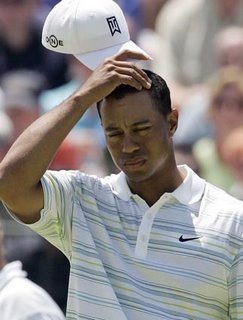
If you're reading this because of the strange title, then I won't disappoint you...I was imagining, what if these racial drugs were used in emergency rooms at hospitals? This could prove to be a disaster because race isn't always clear. If someone like Tiger Woods was rushed to the emergency room, the doctors would think he's Black just by looking at him; so they'd give him the drug for African-Americans...but he'd die anyways because he's only a quarter Black (many people assume he's all African-American). If these race medications were necessary, they'd have to give him the Asian drug because that's what most of his heritage is. Or better yet, give him an accurate dosage:

1/8 European drug
1/8 American Indian drug
1/4 Black drug
1/2 Asian drug


`

Monday, January 01, 2007

Family tree leaves many colors

If you look at the family tree of a mixed-race person, you'll probably see one ethnicity on the mother's side and a completely different one on the father's. That's because many mixed people are the children of 2 monoracial parents. But imagine a family tree that doesn't have one ethnicity on each side, but instead, has many ethnicities on both sides.

This is what the Huie Kin family tree is like. In 1889, a Chinese immigrant named Huie Kin married a Dutch American woman named Louise Van Arnam. And they had 9 children. Here's a link to the story:

THE HUIE KIN FAMILY'S DYNASTY OF DIVERSITY

I've heard stories before about interracial marriages in the 19th century, and almost always, the modern-day descendants of those marriages don't really have a mixed heritage anymore, because the following generations married people of the same ethnicity, which gradually wiped out traces of a multiracial heritage, because one ethnicity slowly became dominant in the family tree. This family, however, is a different story.

The Huie Kin daughters all married Chinese men, and the Huie Kin sons all married White women. So the Eurasian identity of this family has been unusually maintained for more than a century. How often do you see a mixed-race family that's been mixed-race for over a hundred years? I guess these kind of families are common in some places, like Hawaii, but this was the first time I've read in-depth about it.


`

Monday, December 18, 2006

"Kim" isn't always Korean

By now you've probably heard about a family that was stranded in the snow in Oregon earlier this month. When James Kim, his wife, and their daughters went missing a few weeks ago, the story made international news, probably because Kim was well-known within the technology community; he was an editor for CNET and also worked for TechTV.

When I noticed that this story made news around the world, I couldn't help but wonder about what people thought about James Kim's ethnicity. I've never seen news reports that mentioned he was Korean-American, and that's a good thing, because mentioning race would be inappropriate here. However, when people outside of America heard about this, they probably assumed it was a White family who were lost (because most Americans are White). If they saw James Kim's picture, they probably assumed it was an Asian family who were lost.

Actually, it wasn't a White OR an Asian family that was lost...it was both! No, there weren't two families, it was just one. You're probably confused right now--unless you're aware of miscegenation. James Kim was Korean (ethnically) but his wife was White. That's her in the picture above with one of their children. My point is, I'm glad the media didn't say anything about ethnicity when covering this story, but it disturbs me a little that some people would assume this family is full-Asian just because they saw James Kim's picture, or assume this family is full-White just from seeing his wife's picture.


`

Wednesday, September 06, 2006

Muslims are not a race

In honor of the 5th anniversary of 9/11, the San Francisco Chronicle has a story about how Muslims are victims of racial stereotypes, even though Islam is a religion and not a race.

Middle Eastern people aren't the only ones suffering this kind of racism. Like the article says:

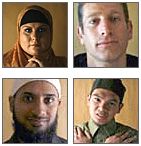
A new racial stereotype is emerging in America. Brown-skinned men with beards and women with head scarves are seen as "Muslims" -- regardless of their actual faith or nationality.

TYPECASTING MUSLIMS AS A RACE


Sunday, August 20, 2006

"Macaca" doesn't sound like "mohawk"

A 20-year-old Indian-American named S.R. Sidarth was videotaping Senator George Allen (Virginia) making a speech, when suddenly, the Senator singled him out of the crowd and called him "Macaca." "Macaca" is the French-African equivalent of the "N-word." (wow And this Senator might run for President in 2008!)

You can see it happen by clicking the picture below.


George Allen denies he meant "Macaca" as an insult. He says it was a nickname that his staff members gave to the 20-year-old Sidarth, and that they gave it to him because of his apparently mohawk-like hair. Allen's communications director said they nicknamed him "Mohawk," and the word probably transformed into "Macaca."

"Mohawk" and "Macaca" sound too different from each other, so I don't think it was an accident. And George Allen's mother immigrated from the same region in Africa where the word "Macaca" is used as a racial slur, so I think it's unlikely he consciously used it as an insult. What could've happened (it's just my opinion) was, someone among George Allen's staff called Sidarth "Macaca" on purpose as a racial slur, and then the other staff members started calling him that (without knowing that it's a slur). And pretty soon, the Senator himself started using the slur (also without knowing it).


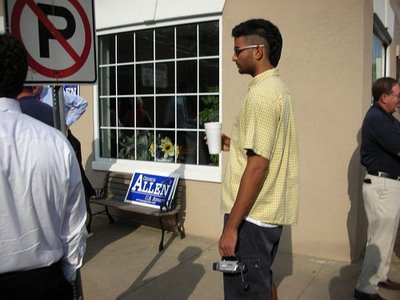
Sidarth is visibly dark-skinned and he could likely be mistaken for an African-American (picture above), so that makes it even more likely that someone called him "Macaca" on purpose as a racist insult. Not to mention that this happened in Virginia, where Blacks are the largest minority group.

Not only does the Senator call him "Macaca," but he also tells him "welcome to America." (You can see it in the video). You can say he's not being racist because he said welcome to America, but Sidarth was born and raised in Virginia! Either the Senator assumed he just came to the US or someone assumed it and then told him. If it was the latter, then I'd like to see him try to become the next US president.


Tuesday, July 18, 2006

"Americans" are NOT White!

"American" does NOT mean "White person"

Have you noticed when people talk about Americans, they're usually thinking of White people? This is an insult to people in the USA who are NOT European. I noticed a lot of people ouside of America use the word "American" is if it's an ethnicity. As in: "are you half American?" or "are you full-blooded American?" or "I'm 1/8 American!"

Can people PLEASE realize that there is no such thing as "American blood" and that Americans can be from ANY race, because "American" is not an ethnicity!

I notice many people think this way:

1. African-Americans are "Black"
2. Asian-Americans are "Asian"
3. Latino-Americans are "Mexican"
4. Native Americans are "Indian"

BUT...

Euro-Americans (White people) are "American"

C'mon, I mean, a man who just came here from Europe last month will "look more American" than a woman who's a 3rd or 4th generation Japanese-American. Why? Because he's White and since most people think: "American = White", the American of Japanese descent will look like a foreigner to most people, even though her family has been in the United States for a century!

I wish people would realize that nobody "looks" American, because Americans don't HAVE a "look". We're diverse. We're not all White. You can't tell if someone is American just by looking at them.

And American people who are mixed-race? Don't get me started!