Showing posts with label History. Show all posts

Monday, February 16, 2015

Portrayals of Asian Guys with Latino, Black, White, & Mixed Girls

Asian men are rarely in interracial marriages, according to the US Census. And they're often stereotyped as unmanly, sexually undesirable, or emasculated.

But the media still depicts them in interracial relations. Here are some examples.

Guide:
E - East Asian
SE - Southeast Asian
S - South Asian

"South Asian" means countries like India, Pakistani, Bangladesh, and Sri Lanka.

Movies
La Nuit Venue ("Night Comes") - E
Leonie - E
Lion - S

TV Series

Monday, December 05, 2011

The year of mixed-race TV stars

Half of the posts I've written so far this year are lists of multiracial actors and actresses on TV shows. But four decades before any of those shows hit the airwaves, one mixed actress and one mixed actor made history in 1966.


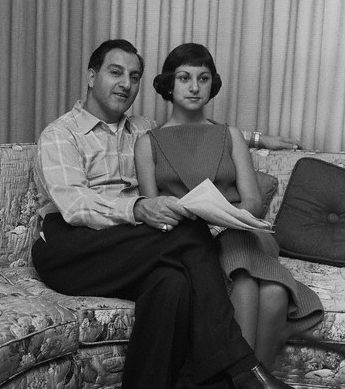
The first mixed-race person to star in a TV show was Marlo Thomas, who played the title role in the series That Girl, which first aired on September 8, 1966 on ABC. (1966 is pretty early, I assume I'm correct in saying she was the first, but correct me if you know an earlier person).


She is mixed Arab and European. Her dad was the son of Christian immigrants from Lebanon (I mention they were Christian because everybody assumes all Arabs are Muslim, and I love to challenge stereotypes), and her mom was Italian-American.
That's Marlo with her dad, and her with the whole family (she's the oldest kid).


After the debut of That Girl, ABC premiered a show with a mixed-race male in one of the lead roles—on the very next day after That Girl debuted. As though they wanted to prevent anyone from saying they're sexist against mixed guys.

That series was The Green Hornet on September 9, 1966. One of the main characters was played by Bruce Lee. He wasn't the main star, but decades later the DVD release said he was (above), as if ABC regretted not giving the lead to a mixed actor, like they did to a mixed actress.


Most people have heard of him, but very few know he was mixed race. His dad was Chinese and his mom was biracial Chinese/German.
In both photos, he's in the middle and his biracial mother is on the left.


As if they were addicted to being pioneers, Marlo and Bruce went further and became the first mixed woman and man on the cover of the biggest TV magazine, in the same year their two programs premiered.

It's like the TV industry was proclaiming the arrival of multiracials.

(Correct me if you know an earlier mixed person who was on TV Guide's cover)


Thursday, December 01, 2011

French colonial Vietnamese-Africans

This is my English translation of this French article.


War and Race Mixing: "I was born from a Vietnamese mother and a Senegalese father."
by Florence Lame


The bloody war in Indochina caused more than 500,000 deaths, 15,000 of which were African servicemen. The surviving servicemen fled Vietnam along with their women and children. What followed was a melting pot lineage, which today still retains the features of a love that transcended time and war.

The war began in the 1940s, following the Japanese invasion of Lang Son, a border town between Vietnam and China. It was the beginning of what's commonly called the "Indochina War", referring to a large peninsula which at the time consisted of Laos, Thailand, Cambodia, Burma, a part of Malaysia, and Vietnam. Seeing their sovereignty (dating from colonialism) threatened by Japanese attacks, the French army decided to call in servicemen from Africa as reinforcements for the army already there, they were the "Senegalese colonial infantrymen". With nationalist movements following WWII in 1945, the fighting lasted until 1954. At the end of this war, the servicemen who survived left Vietnam by boat, with some of them bringing along women and children: "My father took us all in his arms and we crossed the Pacific Ocean for months in boats that were constantly in danger of capsizing", recalls Jean Nguyen, son of a Vietnamese mother and Senegalese father. For most Vietnamese, Chinese, and Laotian women who had affairs with African servicemen, such escape was the only hope of surviving a massacre. Thus appeared in Africa a melting pot lineage: Senegalese-Vietnamese, Ivorian-Vietnamese, Morroccan-Vietnamese, etc.

Since their arrival in Senegal, very few Asian women returned to their homeland. Some lost everything and saw no reason to come back, others simply couldn't afford it. Today they're largely recognized and respected for having protected their families during the war, and having adapted to a world and customs that were previously completely unknown to them. They perfectly mastered the language, the cuisine, and the customs of their host country. But the integration of children from these unions was no easy task. "At first, our relationship with the Senegalese population was somewhat difficult. In the street, at school, we got called 'chinks'. There were many fights in the schoolyard because of that!" recalls Jean. But the Viet-Senegalese who live in Senegal today are considered to be Senegalese themselves.


Vietnam is known for being very conservative and it's sometimes hard for mixed-race people to make a life for themselves there. Nicole Hoang, a young woman of Senegalese and Vietnamese descent who speaks Vietnamese fluently, tells us about one of her visits to Vietnam: "It's harder for 'Black' mixed people. When they saw me speaking Vietnamese, having never seen Blacks, they couldn't fathom it. Yet the people who fought in the Indochina War were much nicer!" This racial mixing is for some an openness to the world, a rich culture, while for others it's the opposite: it's a disgrace. "I am the symbol high treason with the enemy, of a forbidden collaboration," confided Kim Lefèbvre, a Eurasian who grew up in Vietnam, in an interview for Eurasie.net.

Over time, most children of this generation migrated all over the world. Some have chosen to come settle in France, where notably they set up an organization for mixed-race Senegalese-Vietnamese people, The Lai-Den ("mixed race" in Vietnamese) in Paris. The same thing exists in the United States, such as the father of famous golfer Tiger Woods, for example, who fought in the Vietnam War, during which he married a Thai woman. This racial mixing, which was seen before as something incomprehensible, has thus become a distinguishing trait of African/Asian mixed people, but most of all, an identity in it's own right.


Wednesday, November 23, 2011

French Native Americans

This is my English translation of this French article.


Those American Indians who speak French
by Jean-Michel Selva

Father Roch Naquin, Houma Catholic priest

The Houma tribe of Louisiana speak French the way it was used in the 18th century. But the destruction of their environment by oil companies threatens the harmony of this ethnolinguistic community.

They are the cousins of the Apaches and the Sioux. Their skin is red and they speak our language, or rather, that of Montesquieu. Houma Indians are the forgotten ones in the history of Louisiana, where they had to seek refuge from advancing white settlers from England in 1765, following the Expulsion of the Acadians. Already 30 km (18.6 mi) out from Houma, a little town south of New Orleans, and still nothing in sight except a narrow strip of land jutting out into the water. The huge 4x4 Chevrolet Silverado of Thomas Dardar Jr (below), community leader of the Houma Indians, speeds ahead of us and guides us across Isle de Jean Charles. Destroyed by Hurricane Katrina in 2005, the road, which sinks into the bayous towards the Gulf of Mexico, has just been rebuilt.

Finally, rising in the distance are Pointe-aux-Chenes and breathtaking houses on pilotis, a sort of mobile homes erected on wooden stilts, overlooking the lagoon. "Watch Pipeline", warn signs stuck in the middle of the waters, extending out from either side of the road. A few dead trees, eaten away by salt, are the only ones accompanying us on this road. In this abandoned setting live the majority of the French-speaking Houma Indians.

Black pants, turquoise shirt, and a vest with Indian designs on which his braid sways back and forth, stretching down his back, the leader Dardar stops between the pilotis under a huge yellow dwelling. Father Roch Naquin comes to welcome him, they greet each other with open arms, very French indeed.

Allies of the French

"At the end of the 17th century, before the strained relations between French and English settlers, our community naturally formed an alliance with the former, because the explorers Cavelier de La Salle and Pierre Le Moyne d’Iberville had always been supportive of it," explains Thomas Dardar. "As a result, our ancestors learned the French language, and passed it down to us orally. The vast majority of the Houma can neither read it nor write it, but they always speak it."

Banned from schools for being Indians, the Houma were eventually allowed to enroll in public education starting in 1964. But until 1975, they were punished whenever they dared to say a sentence in French. For this tribe of American Indians, a three-century-old form of French was able to endure, because of the cultural importance of oral tradition and their practice of it without contact with the outside world.


The Houma thus saved from oblivion expressions like: catin (harlot/whore/prostitute) for poupée (doll); char (chariot/tank/ wagon) for automobile (car); espérer (hoping) for attendre (waiting); s'épailler (removing dirt from badly forged gold) for s'étendre (stretching/spreading/expanding); and even "icitte" for "ici" (here), "au boutte" for "au bout" (at the end)...They mix as many words with Choctaw, their ancestors' language.

"The State of Louisiana granted us Indian nation status only in 1979," notes Thomas Dardar, "but we're still waiting for federal recognition, already rejected in 1994." "We here are the roughly 17,000 Houma Indians, divided into three clans, united by the use of the French tongue." Father Roch Naquin like to say he considers himself French and Indian. "My ancestor Charles came from the Bordeaux region and married an Indian. Here on Isle de Jean Charles, my father and those of his age spoke and wrote French. He then learned English, unlike my mother who never wanted to. Today only the eldest of my neighbors refuse to. The youngest became English speakers. It will be hard to preserve our language." At 55 years old, even the chief Thomas Dardar who's mastered French perfectly uses the American language more often. This generation of Houmas in their fifties may be the last to express themselves in the language of Molière. The last surviving link to a way of life that's already no more.

A Difficult Life

"Forests with tall trees used to grow here," recalls Chief Dardar. "Over there, my grandfather raised cattle in the meadows where muskrats would run," points Roch. "We had horses to plow the land, which produced enough to feed us. With the intensive oil drilling, salt water has leaked everywhere, it continues to eat our land and destroy all the vegetation."

To survive, the Houma community, scorned by everyone for centuries, turned to fishing. Some of them have managed to become lawyers and doctors, others have left to work in the shipyards. But for one year now, because of the oil spill in the Gulf of Mexico, the Houma can no longer fish like before. Skin diseases and respiratory problems have emerged. "They seem to be linked to BP spreading solvents to get rid of the oil slick floating in the gulf."

This fragile community is plagued and weakened even more: "very few among us have access to adequate social welfare," laments chief Dardar. "We've also suffered from the last four hurricanes. My house has been raised higher above ground on three occasions in twenty years, the roofing replaced a number of times. Leave and go elsewhere? No, no, this here is my house, this is the land of our ancestors," protests Father Roch Naquin.


Sunday, August 12, 2007

First White child

In Australia, the first baby with European ancestry was born on January 26, 1788. In the US, the first was in the 1560s, and in Canada, it was probably in the early 18th century. During colonial times, people in European colonies would often celebrate the birth of the "first White child" in their settlements. There was once an American postage stamp that celebrated the first European baby in North Carolina, USA (picture above).

When I learned about this, my first reaction was "that's racist!" If anyone celebrated something like that today, it would be the Ku Klux Klan or Neo-Nazis. And then I thought, "is it really racist?"

Celebrating White/Caucasian ethnic heritage is a lot more controversial these days because many people will think it's White supremacy or racism. A really good example of this is when Lisa McClelland (picture at left), a high school girl in California, tried to start a "Caucasian Club" 4 years ago, and it became a national controversy.

There's nothing wrong with being proud of your White/European heritage, but Whites/Europeans have been overrepresented throughout history and Eurocentrism has historically been a "normal" thing, so people might misunderstand you. Non-European heritages should definitely be celebrated because they've always been ignored, but celebrating Asian, Black, Latino, and indigenous cultures should never mean looking down upon European heritages. That's what Whites/Europeans have done to other people throughout history, and doing that to them would just reverse the hatred, when there should be no hatred in the first place.


`

Monday, January 29, 2007

Black sailor harbors secret

Black History Month starts in America this Thursday. This annual celebration involves a lot of reflection upon African-American people of the past, some of whom were in positions of authority, including the military. The "Black Admiral" was an example of this; it was a painting of an African-American navy leader during the 18th century--which was very rare for a work of art because Blacks were usually shown in negative stereotypes back then.

It turned out too good to be true. Last year, an art restoration revealed: he's White!

'BLACK ADMIRAL' PAINTING FOUND TO BE A FRAUD


`

Monday, January 01, 2007

New Year Special: interracial history

It's 2007! And to ring in the new year, I thought I'd take a look back at mixed-race experiences of the past. We often think about interracial marriages as being a new thing, but it's been around for centuries. Here are some random multi-ethnic stories from the past.


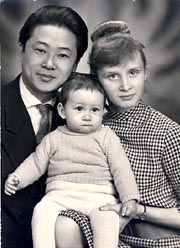
During the 1950s, North Korea and East Germany had a foreign exchange program which allowed Korean students to study at German universities. This resulted in some interracial marriages between German and Korean college students. However, it also resulted in some heartbreak; in 1961, North Korea ordered their students to return home. Some of the German wives have been trying to reunite with their Koreans husbands for more than 40 years.

Separated by fiat, a German awaits North Korean spouse

Please Find My Husband… Heartbreak over a Repatriated Husband


One can only imagine what half-Japanese people experienced during World War II; especially if the other half of their heritage was a country that was fighting Japan. Here is an article (with an audio interview) about 2 orphan sisters who grew up in Britain during the 1940s. They did not know until they were older that their mother was British and their father was Japanese.

Home Truths: Half Japanese


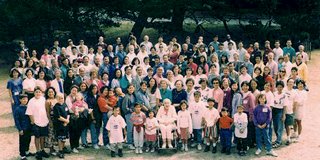
In 1889, a Chinese immigrant to the U.S. named Huie Kin married a Dutch American woman named Louise Van Arnam. Today, the descendants of their 9 children comprise a multi-ethnic clan who are proud of their mixed heritage (mostly European and Asian), which is celebrated at their family reunions.

The Huie Kin Family's Dynasty of Diversity


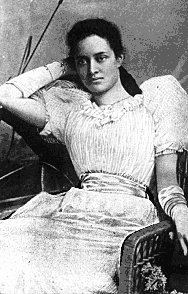
Victoria Ka'iulani would have been the next queen of Hawai'i, had the monarchy not been overthrown in 1893. She was the daughter of a businessman from Scotland and a princess in Hawaii's royal family, which made her half Hawaiian and half Scottish.

Women in History of Scots Descent: Princess Kaiulani

Sheraton Princess Kaiulani: History of the Princess


`

Family tree leaves many colors

If you look at the family tree of a mixed-race person, you'll probably see one ethnicity on the mother's side and a completely different one on the father's. That's because many mixed people are the children of 2 monoracial parents. But imagine a family tree that doesn't have one ethnicity on each side, but instead, has many ethnicities on both sides.

This is what the Huie Kin family tree is like. In 1889, a Chinese immigrant named Huie Kin married a Dutch American woman named Louise Van Arnam. And they had 9 children. Here's a link to the story:

THE HUIE KIN FAMILY'S DYNASTY OF DIVERSITY

I've heard stories before about interracial marriages in the 19th century, and almost always, the modern-day descendants of those marriages don't really have a mixed heritage anymore, because the following generations married people of the same ethnicity, which gradually wiped out traces of a multiracial heritage, because one ethnicity slowly became dominant in the family tree. This family, however, is a different story.

The Huie Kin daughters all married Chinese men, and the Huie Kin sons all married White women. So the Eurasian identity of this family has been unusually maintained for more than a century. How often do you see a mixed-race family that's been mixed-race for over a hundred years? I guess these kind of families are common in some places, like Hawaii, but this was the first time I've read in-depth about it.


`

Monday, December 25, 2006

The Face of Tomorrow

As we enter a new year, many of us must be wondering what the future will be like. As someone who has a habit of viewing things through a racial lens, I'm wondering about the possible ethnicities people might have in the future--and what these people might look like. With anti-miscegenation laws broken down and continuing immigration (not just in America, but around the world), mixed-race people are becoming more common and the world is beginning to see human faces that almost didn't exist a century ago. But what will happen a century from now?

Today, there are an increasing number of people who are half one ethnicity, and half another ethnicity; if you go to places like Hawaii, you'll encounter people whose ancestry is even more complicated (and you can usually tell by the way they look). If you ask a young person what his or her ethnicity is, don't always expect a one-word answer.

So without getting into genetics or biology, what will people look like in the 22nd or 23rd century? We can almost be certain that they won't look like anyone who has ever lived. Faces of the future will embody the mixing of races that is continually becoming more common today. They probably won't look like any ethnic appearance that has ever existed. This has happened before. Many Latino/Hispanic people are generations and generations of mixed Native American and Spanish ancestry, and as a result, many of them look multiracial (on a related note, people who are half-Asian and half-European are commonly mistaken to be Mexican). Do you think there were people who looked like modern-day Latinos before the Spanish arrived there?

The mixed-looking appearance of many Latino people is a result of colonial mixing hundreds of years ago, and we have to wonder: what kind of facial features will today's racial mixing bring about hundreds of years from now? In today's multiracial people, we can see the faces of tomorrow. But a photographer named Mike Mike is taking a different approach.

The curiously-named Mike Mike is from Istanbul, a city that's historically considered to be in both Europe and Asia, and sure enough, many of the residents there look mixed-race. This is probably what inspired him to do a photography project called The Face of Tomorrow.

Mike is going to several cities around the world, and in each city, he takes pictures of 100 random people, and then combines all of them (using computer graphics) to make 2 faces: one male, and one female. The idea is that these 2 faces will be what a person in each city will look like a century from now, and that a city's population represents its racial (and facial) future. From the website:

"The large metropolises of the world are magnets for migrants from all parts of the planet resulting in new mixtures of peoples. What might a typical inhabitant of this new metropolis look like in one or two hundred years if they were to become more integrated? [...] if you could combine all the faces in a city right now you would be looking at the future face of that city."

Here are a few faces that've been done already:

Rio de Janeiro

Hong Kong

London

Sydney

The Sydney face was done with people at Sydney University, so not surprisingly, it looks more mixed-race than the others (in my opinion) since colleges tend to be diverse. The London face, which looks very European, surprised me because my brother went there and he tells me it's very diverse. (Mike explains on the website that the London face isn't very accurate because the photos he took for it happened to be in a very White part of the city).

The Hong Kong and Rio de Janeiro faces, as well as most of the other ones done so far, look more like a general appearance of a modern-day resident in each city, instead of a future mixed-race person, because a lot of those cities aren't really melting pots or salad bowls. But what if The Face of Tomorrow was done in North American cities? I would love to see what this project yields in super-diverse places like New York, Toronto, or San Francisco; those cities are just begging to be included (or at least, I'm begging that they be included).

It's probably impossible to know for sure what people's faces will look like hundreds of years from now. With the mixing of so many ethnicities, it's possible that everyone will eventually look like the same race--the human race. With a new year upon us, we're one step closer to seeing these faces...whatever they will look like.


`

Saturday, August 26, 2006

Would half-White people live?

This week is the 175th anniversary of Nat Turner's slave rebellion. Turner was a Black slave in Virginia, USA in the early 19th century who organized an uprising against White slaveowners. During the rebellion, he told his followers to kill all White people. And indeed, they travelled all over town; freeing slaves while killing White people--not only the slaveowners, but they murdered women and children as well.

How did they determine if someone was White? Obviously they just looked at them and then thought "Black or White?" before killing them or not killing them. This would be much harder today because not everyone looks completely Black or completely White. (What if Nat Turner encountered a Latino, Asian, or mixed-race person?).

What's also interesting is that during the rebellion, Turner encountered a White slaveowner who was protected by his slaves. His slaves thought of him as being a good master, and they were actually willing to fight Turner and his men.

What's even more interesting is that one of the White people in town was a childhood friend of Nat Turner, and he (Turner) told his men to spare the guy's family. But wait, I thought he said "kill all White people"? hmm...I guess that White guy was lucky that he knew Turner personally, huh?

One of the victims was a White woman who was known to be a kind person to Black slaves. So why did they kill her? hmm...maybe because Turner never had the opportunity to meet her. C'mon race obviously has nothing to do with your personality!