Monday, August 22, 2011

Mixed-race women on "Lost"

The characters of "Lost" and the people who play them are multilingual and multinational. They speak at least nine languages and come from more than a dozen countries. There's also interracial marriages/relationships among them.


Despite this diversity, the mixed-race people on the show are never talked about; "mixed-race people" meaning individuals who are mixed race, not a group that's mixed.

I was going to call this "mixed-race people on Lost", then I noticed everyone here is female. I changed it to "women" to be more specific.


Andrea Gabriel

Her character, Nadia Jaseem, is Arab Iraqi but she is mixed Italian, Iranian, Romanian, and Russian. BTW, Iranians aren't Arabs because they don't speak Arabic, however they're Middle Eastern, and Arabs are too.


Reiko Aylesworth

Her first name is a hint of her quarter-Japanese heritage, which also includes Welsh and Dutch. She's in three episodes in season 5.


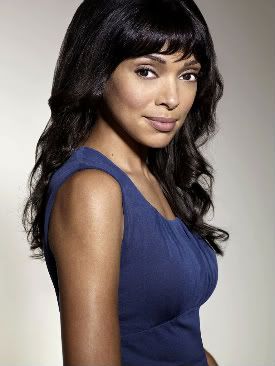
Tamara Taylor

She was born and raised in Canada and is mixed Black and White. She plays Walt Lloyd's mom and Michael's ex, and appears in two episodes, one in season 1 and one in season 2.


Rachel Ticotin

She portrays the police captain and mother of Ana Lucia Cortez, who's played by Michelle Rodriguez, who is also on this list. Ticotin is mixed Puerto Rican and Russian Jewish.


Kimberly Estrada

The only episode she's in is "Not in Portland" in season 3, where she plays the girlfriend of one of the main character's ex-husband. She is mixed Chinese and Spanish.


Zuleikha Robinson

Her role is Ilana Verdansky, who first appears in season 5 and becomes part of the main cast in season 6. Robinson was born in England, grew up in Thailand and Malaysia, and is mixed English, Burmese, Indian, Iranian, and Scottish.


Marsha Thomason

Like her character, Naomi Dorrit, she's from Manchester, England. She is mixed English and Jamaican (White and Black, respectively).
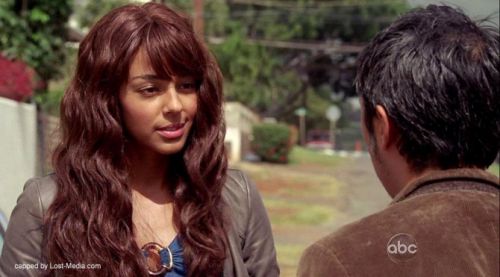


Kiele Sanchez

Her role is Nikki Fernandez, one of the main characters in season 3. Her heritage is mixed French and Puerto Rican.


Yvonne Midkiff

She plays a receptionist in a lawyer's office in the season 6 episode "The Last Recruit". She was born in the Philippines, grew up in Oklahoma, and now lives in Hawaii.

Hawaii is where the show was made and is also the US state with the highest percentage of mixed-race people.


Maybe Hawaii's multiracial vibe rubbed off on the producers when they casted the actresses (they chose an unusually high number of multiethnic ladies...).


---

The following actresses are mixed in a different way; they each have multiple ethnicities in one racial group. This is sometimes called intra-ethnic or intra-racial.

Like somebody who's mixed Indonesian and Filipino (Asian), or someone who's mixed Puerto Rican and Mexican (Latino), or a Polish / German / Italian / Russian / Swedish person (White).

Something worth mentioning is all of the below play a mother or a daughter of another woman on this list. Maybe this means Hollywood is starting to portray mixed descent more accurately.


Michelle Rodriguez

Not only is she mixed Dominican and Puerto Rican but she grew up in both of the countries too. She was a regular cast member in season 2 and made cameos in seasons 5 and 6.


Melissa Farman

Her mother is White American and her dad is French (White from France), and she was raised bilingual in English and French, both of which she speaks on the show.

She plays a younger Danielle Rousseau, whose daughter is Alex Rousseau, who is portrayed by the next girl on this list.


Tania Raymonde

Like her character Alex Rousseau, she's of French descent, but she's also Russian and she might be Jewish too, since her real last name is Katz.


How come there's many mixed girls but not mixed guys?

Sunday, August 21, 2011

Four years later

This is my first post since 2007. I had abandoned this blog because I became busy with my senior year in college, and because few people were reading it anyway.

Since then, I've gotten a Bachelor of Arts degree in American Studies, specializing in the stuff that this blog is about. I've resurrected it temporarily because I got a good idea for a new post (see the post above).

Wednesday, December 26, 2007

Berkeley mixed race conference

Last month, I went to a mixed race conference at UC Berkeley. I have been to events like this at my own college but they were always with students from the same school. At this event, there were at least 5 different colleges represented (all of them UC campuses). In total, there were 50-70 people. That probably doesn't sound so big, but it's still significant, if you consider how multiracial identities have been ignored throughout history, compared to non-mixed ethnic identities.

We started the day with some breakfast. Many of us had to drive several hours to get to Berkeley, and it was very early in the morning, so I think most of us appreciated it. And everything was free too. (Including lunch later in the day!).


After an hour, the conference began with a keynote speaker. He's a professor at UC Santa Barbara who's done work related to mixed-race identity. (I rarely hear about professors who specifically focus on mixed race!).


And then, we walked to a different part of the campus to attend "workshops," which were basically one-hour lectures or activities with a different topic. We could choose which ones we wanted to go to. There was one about the controversy of word "Hapa," there was one about mixed-race women in the media, one about multiracial college clubs, and some other ones too.


Then it was lunchtime. With more socializing.


After lunch, there was a panel discussion. The topic was about how racial and ethnic data gets collected in America, and how it can affect mixed-race people.


And finally, the group picture, with all the schools together:


If you see yourself in any of these pictures and want it taken down, please let me know!


`

Saturday, October 27, 2007

Split-second identity

How long does it usually take to make an assumption about someone's ethnicity? Yesterday, I was on the bus and there were three people sitting next to me, one guy and two girls. The bus hadn't left yet and they were bored, so they passed the time by talking about the people they could see through the window. And they used race to describe the people. I overheard one of the girls say, "that White guy is cute." It took her literally less than one second to conclude it was a White male. She looked at him and, a split-second later, she made that comment. It surprised me how fast she made an assumption about a stranger's ethnicity. It's a little disturbing that people can jump to conclusions so quickly when it comes to race.

Many people have four "preset" racial boxes in their heads: White, Asian, Black, Latino. And they throw people into the box that fits best (based on the person's appearance). If they can't fit them into one of those boxes, they just avoid the topic of ethnicity altogether. And I have noticed this too; when people try to describe a person whose ethnicity is unclear, they just don't mention it. If that guy standing outside the bus window looked mixed-race instead of White, that girl would have just said, "that guy is cute."

I hate to admit it, but this is why I wish I looked more mixed-race. It seems like people who don't look like a specific ethnicity are less likely to be labeled racially, and if they can't be labeled racially, doesn't that mean they're less likely to suffer from prejudice? Of course I'm not saying they're "immune," as I wrote more than a year ago.


`

Monday, October 01, 2007

Ethnic diversity has no language

For some reason, whenever I'm in a foreign language class, I usually never think about race or ethnicity. I'm the kind of person who thinks about those things ALL the time (as you can tell by this blog!). But when I'm studying another language, I completely ignore it. I don't know why.

For the past few months, I've been taking French classes, and I just realized, whenever I'm in those classes, I don't pay attention to the ethnicities of my classmates. Usually when I'm in a class, what I always notice is the different races in the classroom. But for some reason, I don't pay attention to that when I'm in a French class. When I'm in a French class, the ideas of race and ethnicity just disappear, and everyone around me becomes the same thing: an English speaker learning French. Not an Asian, Black, or White English speaker; not a mixed-race English speaker; but...a human English speaker. Ancestry and heritage become meaningless, and I feel this strange hippie-Utopian bond with my classmates.

I don't know why I stop thinking about race when learning French. But I don't think it has anything to do with that language. It could be any language. My brother had a similar experience when he was in Japan learning Japanese. He told me that the people in his class came from all over the world, and they were from many ethnicities. Then he said something like, "we're all connected by the Japanese language." Actually, I just found the e-mail he sent me two years ago. Here's exactly what he said:

Somewhat interesting with my school is that they try to avoid a skewed representation of various backgrounds so that people come from different countries and would use Japanese as a common tongue. So there's a mix of Asian, European, American and even some black folks.

Now I'm starting to think there would be no racism if everyone on Earth spoke the same language. But what that language would be, I have no idea.


`

Tuesday, September 11, 2007

The world was America

Today is the 6th anniversary of the September 11, 2001 attacks. Most people consider it to be an American tragedy just because it happened in the US. But the fact is, dozens of nations lost citizens in the attacks. It happened in America, but not everyone who died was an American citizen.

According to this page from the United Arab Emirates' American embassy, the victims of 9/11 came from 82 countries; including 25 people from Canada, 67 from Britain, 16 from Jamaica, and 15 people each from the Philippines and Mexico.

When most people think of Americans, they think of White people who speak English. But the people who died in 9/11--an event that happened in America--are so much more diverse than that. They came from more than 80 countries in 6 continents. The French newspaper Le Monde said it best with their September 13, 2001 headline: "Nous sommes tous Americains" ("We are all Americans"). It seems like the only thing that's really "American" about 9/11 is its location. If we're talking about the deaths and the loss of human life, 9/11 was more global than anything.

And even if we do consider only the American citizens who died, we still get a racially mixed group of people; most of the victims were from New York City, which is one of the most ethnically diverse cities in the world.


`

Sunday, September 02, 2007

Undercover half-Filipino girls

Last year, I ran into an old classmate whom I went to school with back in 1998. It was the first time we had seen each other in 8 years, and I discovered something new about her: her ethnicity. When we were going to school together, it was long before I was thinking about race all the time, so I never thought about what ethnicity she was. But I did subconsciously assume that she's White. She had dark brown hair, round brown eyes, and was one of the tallest girls in the class. I guess she looked like a Latina with strong Spaniard blood, but other than that, she just looked White to me.

When I found out what her actual ethnicity is, it was a complete surprise: she's half Filipino (and half White).

A few weeks ago, I found out another old classmate of mine is also half Filipino and half White...I went to high school with her and I always thought she's only Filipino.

Learning about their real ethnicities didn't change the way I feel about them, but it definitely changed the way I see them; which is strange because they've had the same identity their entire lives. It felt weird to "discover" their ethnicities...after I've known them for years. Has that ever happened to you? You know somebody for a long time, then you get really surprised when you learn what their heritage is? I felt like I was meeting a new person. It's like they were wearing a mask all those years--a mask that was only in my mind--and I just unmasked them.

Experiences like these are reminders that not only should we never assume people's ethnicities, but we also shouldn't be shy about asking them about it if we've known them for a while.


`

Sunday, August 26, 2007

Single-parent heritage

Whenever people see a child with only one parent, they usually assume the kid is the same ethnicity as that parent. If there's a girl who is half Asian and half White, and people see her with her Asian father, most people will assume she's Asian. But if people see that same girl with only her White mother, they'll likely assume she's White.

As if it wasn't bad enough that people make these assumptions, the American government used to do this when collecting census data. Before the 2000 U.S. Census, mixed-race people in the United States could only choose one ethnicity. A woman named Susan Graham was filling out the Census in 1990, and she couldn't find a place on the form for her multiracial children. She asked the U.S. Census Bureau about it and they told her that mixed-race children are counted as the mother's ethnicity!

Graham is white. Her husband is black. When she received her 1990 census form, she complained to the census bureau that there was no place for her children. An official told her that children take the race of the mother because "in cases like these we always know who the mother is, but we don't know who the father is."

About the same time, her son was starting kindergarten. Her husbnd took him to school. [sic] A teacher, filling out a school form, concluded her son w
as black.

"We had the same child who was white on the census, black in school and multiracial at home," Graham said. "And I thought there's something wrong with this picture."


(Source)

Like she says, when the same person is White on the Census, Black in school, and mixed-race at home...there's something wrong.

This problem was fixed in the U.S. Census in 2000, but it still exists elsewhere. Many people still assume a person's mother and father are always the same ethnicity, and when they see someone who is biracial, they usually force them into one side. A well-known example of this is how the media usually refers to Tiger Woods as African-American. He's actually only 1/4 Black and is more Asian than any other race, but almost nobody calls him Asian-American.


`

Sunday, August 19, 2007

Intel Core Duo ad controversy

Some people thought this was racist:


This is an actual magazine advertisement from Intel. After people complained about it, the company discontinued the ad and apologized.

Those who were offended by this ad thought the men on the floor were Blacks bowing down to a White/European. Last month, I wrote about the advantages of having mixed-race people in advertising, and this ad is a good example. If everyone in this ad looked multiracial instead of monoracial, nobody would say it's racist because it would be unclear what ethnicity the men are in the first place.

If you're unsure about the ethnicity of a person, it's almost impossible to see them in a racial way. The same goes for advertising; if customers see people in an ad and they have no idea what ethnicity they are, they won't see anything racial about it. But the people in this Intel ad do not look mixed-race, so it was clear to many people what ethnicity they are. Some even saw a racist image.


`

Sunday, August 12, 2007

First White child

In Australia, the first baby with European ancestry was born on January 26, 1788. In the US, the first was in the 1560s, and in Canada, it was probably in the early 18th century. During colonial times, people in European colonies would often celebrate the birth of the "first White child" in their settlements. There was once an American postage stamp that celebrated the first European baby in North Carolina, USA (picture above).

When I learned about this, my first reaction was "that's racist!" If anyone celebrated something like that today, it would be the Ku Klux Klan or Neo-Nazis. And then I thought, "is it really racist?"

Celebrating White/Caucasian ethnic heritage is a lot more controversial these days because many people will think it's White supremacy or racism. A really good example of this is when Lisa McClelland (picture at left), a high school girl in California, tried to start a "Caucasian Club" 4 years ago, and it became a national controversy.

There's nothing wrong with being proud of your White/European heritage, but Whites/Europeans have been overrepresented throughout history and Eurocentrism has historically been a "normal" thing, so people might misunderstand you. Non-European heritages should definitely be celebrated because they've always been ignored, but celebrating Asian, Black, Latino, and indigenous cultures should never mean looking down upon European heritages. That's what Whites/Europeans have done to other people throughout history, and doing that to them would just reverse the hatred, when there should be no hatred in the first place.


`

Sunday, August 05, 2007

More than Indian or Chinese

On July 22, 2005, police in London, England mistakenly killed a man because they thought he was a terrorist. People said the guy had an "Asian" appearance. On June 30, 2007, there was an attack at Glasgow International Airport in Scotland, and the suspects were also described as "Asian."

But wait.

Did they mean these guys looked Chinese? In America, if someone looks "Asian" it means they look "Chinese" (regardless of what ethnicity they actually are). But these events happened in the United Kingdom; when they said "Asian" they meant Indian (from India). The American media would never use the word "Asian" to describe people from India (maybe they would use the term "South Asian").

Most people will agree Filipinos are Asian, but I have never heard people use "Asian" to describe their appearances. In the US, Asian is generalized as Chinese. In the UK, Asian is generalised as Indian. In the Philippines there are people who look Chinese, Indian, or a mix of both, like boxer Manny Pacquiao (picture above).

"Asian" usually refers to Chinese or Indian, but it doesn't always mean people from China and India.

In the United States, "Asian" usually means people from here:


...Vietnamese, Japanese, and Koreans are generalized as "Chinese."

But in the UK, "Asian" is:


...Pakistan, Sri Lanka, and Bangladesh are also included.

I don't know what "Asian" means in Australia/NZ or Canada. If you are from those countries, please comment.

In any case, "Asian" more accurately means people from here:


`

Tuesday, July 31, 2007

Update on my forum banning

Last month I was banned from a mixed-race forum. I wrote about it here.

It took about a month for the administrator of the forum to reply to my request of an appeal. I finally received a response, and it was rejected.

After reading the e-mail, I slowly realized this is the end of my life on an online community that has meant a lot to me. In the 2 years I've been there, I've grown intellectually and emotionally in a way that I never would have in real life. But at the same time, I also feel like I've outgrown that community. I feel like I've already received the most out of it than I ever could, and if I were to stay there, it would be like a high school graduate hanging out at his old high school.

The good thing about being banned is I don't have to worry about deciding whether or not to delete my account. There are a few people there who don't like me, and there's been times when I was tempted to leave and never come back. Now, I feel like I've died in battle rather than surrendering. The people who are celebrating my ban might feel like they've won, but I too feel victorious because I stayed there as long as I could (instead of leaving voluntarily).

With the help of a forum member who doesn't dislike me, I posted a long formal goodbye to the community. If you're a member of that forum, you've probably seen it.


`

Sunday, July 22, 2007

The new diversity

I'm sure we've all seen advertisements where there's people of different races together; it's a way of selling things to ethnically diverse audiences. Even though it's always nice to have ethnic diversity in advertising, I think it's a little old to just show an interracial group of people. Whites, Asians, Blacks, and Latinos being together is no longer what diversity is all about. Diversity today is also about people who belong to more than one race; and I don't mean an interracial group of people, I mean individuals who have multiple ethnicities in themselves (in other words, mixed-race people).

Whenever I see an ad that shows people of different races, I automatically think, "oh they're trying to show diversity." To me, showing different races together in an ad isn't really a good way of advertising anymore because it's kind of obvious they're trying to appeal to everyone; and it looks kind of preachy and over-moral if the ethnic diversity is too obvious.

Now, if we have mixed-race people (or at least, people who look mixed) in ads, the ethnic diversity is less obvious, because it's not clear what their heritage is. And it's more effective in advertising because people can look at a mixed-race person and have their own interpretations about what his or her ethnicity is; most people never think about mixed ethnicity when they think about race, so they would assume this girl is monoracial (yet have no idea what ethnicity she is), when she's actually mixed.

Another reason it's more effective to have mixed-looking people in ads is because it promotes diversity without looking like it's being sold. If we have an ad with White, Black, and Asian people together (without any mixed-race), it's like they're shoving diversity in your face and trying to look "modern." But if you have mixed-looking people, the diversity isn't as "loud" and it's more subtle, because different people will have different ideas about what ethnicities they are.

Of course, if you actually are trying to advertise to a specific ethnicity, then mixed-looking people might not be a good idea.


`

Tuesday, July 03, 2007

The most popular question

There's a woman on YouTube known as HappySlip (real name: Christine Gambito), and she's become quite popular in the past year. Being popular on YouTube means millions of people around the world watch your videos, and of course, this also means being watched by different races and ethnicities. In one of HappySlip's videos, she answers some of the questions that many people on YouTube have asked her, and she says the most popular question is:

"Are you Filipino?"

Link to that video: HappySlip Vlog #1

This made me think "why is THAT the most common question?" There's a lot of other questions people could ask her, like: "what's your real name?" or "are you married?" For some reason, what people want to know the most is if she's Filipino! It seems like people get uncomfortable when they can't figure out someone's ethnicity, and HappySlip's appearance does look racially unclear. I remember seeing a comment on another video of hers' and it said: "are you Spanish?" (this question can either mean: "are you Latino?" or "are you Spaniard?").

Another reason I was surprised about "are you Filipino?" being the most asked question is because many people haven't even heard of Filipinos. I know that's hard to believe, but the Philippines isn't exactly a world-famous country, and YouTube is a global community, so it's surprising that her fans from around the world would ask that. I would've expected "are you Mexican?" to be a more popular question towards her instead of "are you Filipino?" because Mexico is a lot more well-known compared to the Philippines. (And HappySlip looks like she could pass for Mexican).


`

Tuesday, June 26, 2007

Banned from a forum

Today I was banned from an online discussion board. I had been a member there almost 3 years, and without warning, my account was locked and I was told to leave forever. When I say I was banned "without warning," I mean, I was never told that I was close to being banned, it just happened out of nowhere.

If you're reading this, you're probably a member of that forum, because I put a link to this blog in my profile when I was still a member there.

And this blog is slightly related to the forum because it was an online community for mixed-race people.

I was thinking that some of you members on that forum might visit me here. So I just wanted to write this to acknowledge you. I haven't forgotten you.

Monday, May 14, 2007

Crossing the White line

This is something I always think about. People from WHAT part of the world can be considered White? It's easy to say White people are Europeans, but it's not as simple as that. Where does Europe end and the non-White part of the world begin? Countries like Greece and Turkey are at the very edge of Europe. Do people in these countries count as White? Middle Eastern people are sometimes considered White, and I guess that makes sense, because another word for White person is "Caucasian", and Caucasian refers to the Caucasus Mountains, which are in the Arab part of the world.

An interesting thing I've noticed is, some Europeans will hesitate to call themselves "White." One time, this guy on the train was telling me about his ethnic heritage, and I asked him if he was White. He said, "well I wouldn't say 'White'" and then he listed a bunch of ethnic groups--all of which were from Europe! If he's full European, why doesn't he identify as White? I think it's because not all European ethnicities fit into the common idea of what a White person is. Another time, I was talking to a girl about one of her friends, and she said her friend was half Japanese. And then I said, "is she half White?" She hesitated for a moment and then said "half Greek." She didn't say "yes" or "no" to my question of "is she half White?" That probably meant she didn't know if Greek people are White. And it is kind of hard to tell what Greeks are exactly; Greece is located at a global crossroads (it's in the middle of Europe, Africa, and the Middle East). The same thing goes for countries like Armenia, Iran, and Iraq. Are they Asian countries? European countries? Are people from those countries White?

Sometimes I wonder if Italian people are White. I once thought they're Hispanic because some of them look Mexican and Italian sounds like Spanish, but they're obviously not Hispanic because they don't have a Spaniard history. Some Italians, Portuguese, and Spanish people have darker skin than other Europeans, so I never thought of them as White people. But technically, they ARE White? I guess the general idea is: if they're in Europe, they're White. But again, where does Europe end?

My conclusion is, the people who are usually thought of as being White are: British people, Scandinavian people, and people from German-speaking countries. I noticed, the more southern or eastern a European country is, the less likely the people in that country will be considered White.

Another good question is, where does Europe end and Asia begin? Arab countries are in the middle of these 2 continents, and not surprisingly, many Arabs look like a mix of European and Asian.


`

Monday, February 19, 2007

Ku Klux can't

Here is an interesting example of how your ethnicity has nothing to do with your personality. This guy was a very devoted member of an organization and he was eventually offered a leadership position. This organization was the Ku Klux Klan, and they considered him to be a "loyal Klansman," which is funny because...he's Black!

BLACK SERGEANT WAS 'LOYAL KLANSMAN'

They never found out he was Black, but I wonder what the KKK's reaction would have been if they did find out.


`

Monday, February 12, 2007

You won't be my Valentine

Valentine's Day is this Wednesday, and here is a story about how interracial couples are never represented on greeting cards. It also talks about what people tend to think about interracial relations in general.

MIXED COUPLES GET NO LOVE FROM GREETING CARDS

You need Windows Media Player to listen to the story. Or, if you can't listen to it, you can read it instead (I've written it out here):


Valentine's Day is here again. While some people hide under the covers, others get carried away with the love of it all--or--the consumerism of it all. Chocolate candies? Check. Long-stem roses? Check. Romantic greeting card? Well...I want us to appear for a moment to talk about this one item.


Let's just say you're in an interracial relationship and want to give your significant other a card, that actually shows an interracial couple. Some people might think: "why are you bringing this up? Is it even important?" Well, yes it is. And the number of companies that've cropped up in the past several years to cater to this demand confirms it. People need to see images of themselves reflected in different spaces. This reflection is what tells us that we're ok. That there's nothing wrong with us and that there are others out there like us. Whether it's in the media, or on the colorful cover of a Hallmark card, we need messages that we are not alone.


Think about how disheartening it would be to look for interracial images in row after row of your local card store, and see tons of furry creatures, and cheesy hearts, and perhaps even White couples or Black couples but nothing that showed an intermingling of these or a deviation from these. We have a way to go in this arena. Let's take my biggest pet peeve when it comes to interracial images specifically. You guessed it. The infamous Black hand intertwined with White hand.


We saw huge versions of this when Jungle Fever came out, and they just keep getting replicated over and over. They're everywhere. Sometimes the hands are shaking to show partnership: "we believe in diversity and multiculturalism, let's do business". And sometimes, they're clasped romantically. What the prevalence of this image says to me is that our society continues to be fascinated with White next to Black. "The stark difference!" "The unbelievable contrast!" I say: "Get over it". It's troubling when we're so obsessed with color, that we can't even recognize that these hands are actually attached to people. The hands are always cut off at the wrist, so that you aren't distracted, and have time to pore over the differences in shade, and tone, and size, and damn, how long can you actually study 2 hands without getting completely bored with yourself?


Look, interracial couples are growing rapidly in numbers; in the Latino, Asian-American, and Native American communities, the rate of interracial marriages is hovering at nearly 50%. In the African-American community, 3% of Black wives and 6% of Black husbands are married interracially. Yeah, we continue to be obsessed with the contrast of Black against White. There are clear reasons for this, like the legacy of slavery in this country, but we need to get beyond it and come up to the present.


Let's show all varieties of interracial couples. After all, they exist. And let's stop fetishizing all things interracial to the point that we merely focus on segments of body parts and anonymous skin against skin. Interracial couples are more than just flesh and taboo sex. They involve people, and that's something we should remember; even in the greeting card aisle on Valentine's Day.


`

Monday, February 05, 2007

My name is...who?

Right now, I'm in this class about race and ethnicity, and on the first day, the professor made us write our name on the board and explain the ethnic origins of it. The professor who's running it is African-American and she told us how people never expect her because of her European-sounding name. She was telling us how this girl from an African-American organization was "relieved" when she met her, because the girl had expected a White person.

This mistaken name-ethnicity experience seems to be even more common among mixed-race people. For example, if you're half Asian and your last name is Asian (because your dad is the Asian parent) then people will probably expect you to be full Asian if they see only your name. I knew this girl who ordered pizza over the phone, and when she went to pick it up from the store, they didn't believe she was the one who ordered. They were like, "you're not Asian!" And they made her show I.D. She is Chinese from her father's side, but she doesn't look very Chinese (she's half White). Obviously, those people at the pizza place have never heard of biracial people. Or at least, they assumed only Asian-looking people can have Asian names.

Many Filipinos are familiar with this. Most Filipinos have a Spanish last name so people would always expect them to be Mexican or some kind of Latino. I know Filipinos who get calls from telemarketers speaking Spanish and junk mail (e-mail and regular mail) in EspaƱol. It also happens the other way around with Filipinos; some Filipinos look Chinese, so people would be suprised when they hear a Spanish name. A general rule I've invented is: if you look Chinese and you have a Spanish last name...you're Filipino (I know it's not always true, but that's usually the case).

On a slightly unrelated note, I first heard about Eminem 8 years ago when his song "My Name Is" became popular. At first, I thought he was Black (I'm sure other people thought so too). And it wasn't even because of his name, I guess his voice somehow sounded Black to me. See, even if you don't know a person's name OR what they look like, you still might get their ethnicity wrong.


`

Monday, January 29, 2007

Black sailor harbors secret

Black History Month starts in America this Thursday. This annual celebration involves a lot of reflection upon African-American people of the past, some of whom were in positions of authority, including the military. The "Black Admiral" was an example of this; it was a painting of an African-American navy leader during the 18th century--which was very rare for a work of art because Blacks were usually shown in negative stereotypes back then.

It turned out too good to be true. Last year, an art restoration revealed: he's White!

'BLACK ADMIRAL' PAINTING FOUND TO BE A FRAUD


`